
Communication doesn’t always require words. Sometimes, the most powerful conversations happen through rhythm, beat, and shared musical experience.
For children on the autism spectrum, interactive drumming offers a unique pathway to expression, connection, and skill development that traditional activities may not provide.
Why Rhythm Works Differently
Children with autism often experience the world in ways that make typical classroom activities challenging. Verbal instructions can be overwhelming. Social expectations can be confusing. Abstract concepts can feel impossible to grasp.
But rhythm? Rhythm is concrete, predictable, and universally accessible.
My background in psychology revealed how musical activities engage different neural pathways than language-based learning. For neurodivergent children, this creates opportunities that verbal activities simply can’t match.
The Unique Benefits of Drumming for Autism
Interactive drumming sessions offer specific advantages for children on the autism spectrum:
- Clear, Predictable Structure
Rhythm provides concrete patterns without ambiguity. Beat, beat, rest. Fast, slow, medium. The drum responds consistently every time, creating the predictable environment many children with autism need to feel safe and engaged. - Non-Verbal Communication
Children who struggle with spoken language can express themselves fully through rhythm. Loud beats, soft taps, complex patterns, simple rhythms—each communicates without requiring words. - Sensory Integration
The tactile feedback of drumming, vibrations through hands and body, and auditory input provide powerful sensory experiences. Many children with autism find these organizing and regulating rather than overwhelming. - Success-Based Participation
There’s no “wrong” way to drum. Every child participates at their own level, experiencing competence without the anxiety of potential failure or social judgment. - Self-Regulation Tool
Rhythmic activities can help children develop self-regulation skills. The physical act of drumming provides an outlet for energy and emotion in a structured, acceptable way.
How Drumming Sessions Work
Our workshops are designed to meet children where they are.
- Building Safety First
Sessions start with simple, repetitive rhythms. Children can watch, listen, or participate—always their choice. No pressure, no forced participation. Just invitation and acceptance. - Instrument Exploration
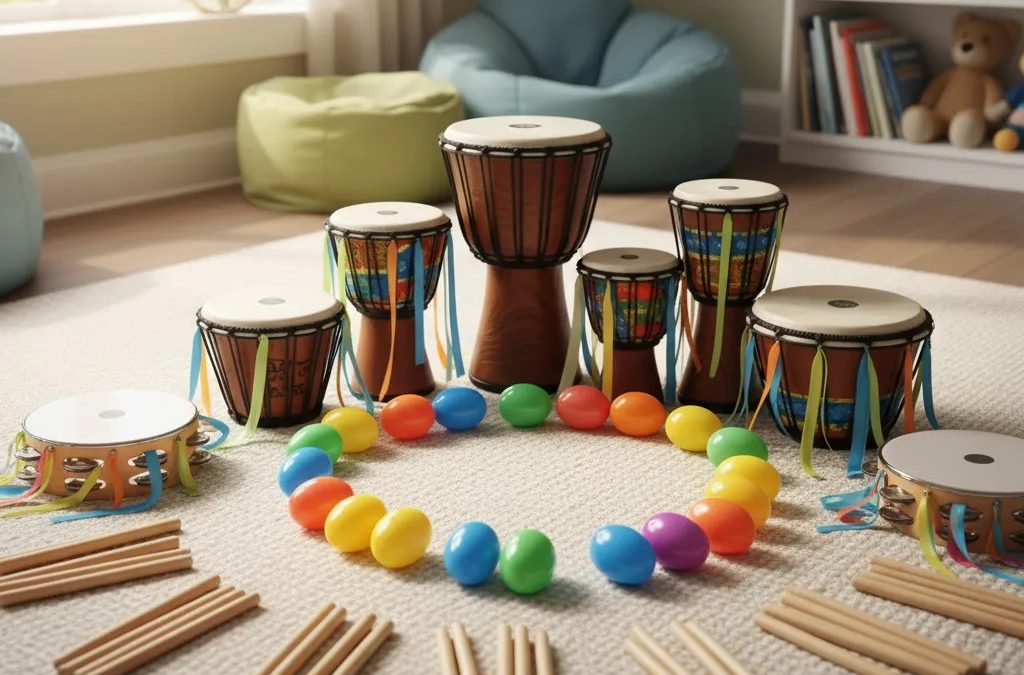
I bring drums, egg shakers, tamarins, tambourines, and the didgeridoo. Children explore textures, sounds, and vibrations at their own pace. Some children who typically avoid eye contact may make their first connection while focused on an instrument. - Pattern Development
We establish simple rhythm patterns through echo games (I play, you play) and call-and-response activities. These predictable structures provide frameworks that support learning and engagement. - Creative Expression
As comfort builds, children create their own rhythms. Some stay simple. Others develop complexity. All expressions are valued and celebrated. - Group Connection
When the whole group plays together, children who typically struggle with group activities find themselves part of something bigger—a drum circle where everyone belongs exactly as they are.
Supporting All Learners
While drumming is particularly beneficial for children on the autism spectrum, it supports diverse learning needs:
- For Children with ADHD:
Physical engagement and rhythmic structure help channel energy productively while improving focus and attention span. - For Anxious Children:
Predictable patterns and non-competitive environments reduce anxiety while building confidence through achievable success. - For Children with Speech/Language Delays:
Rhythm activities support language development through pattern recognition, auditory processing, and non-verbal communication practice. - For All Students:
Drumming builds coordination, listening skills, teamwork, cultural awareness, and joyful self-expression in inclusive environments.
Our workshops adapt to diverse classroom needs, supporting truly inclusive education.
The Right Instruments Matter
I bring global percussion instruments specifically chosen for accessibility:
- Hand Drums: Various sizes accommodate different hand sizes, strength levels, and sensory preferences
- Egg Shakers: Perfect for children who need lighter sensory input or have limited motor control
- Tamarins: Provide both visual and auditory feedback with simple motion
- Tambourines: Offer multiple ways to create sound—shake, tap, or strike
- Didgeridoo: Deep vibrations provide unique sensory experiences many children find calming and organizing
Every instrument offers multiple entry points for participation at any ability level.
Implementing Drumming in Educational Settings
Whether you’re an elementary school teacher, special education coordinator, occupational therapist, or program director, therapeutic drumming can enhance existing curriculum and support diverse learners.
Ideal Settings:
- Special education classrooms
- Inclusive elementary classrooms
- Autism support programs
- Occupational therapy groups
- Social skills development groups
- After-school programs
- Community events focused on inclusion and accessibility
What’s Required:
Just space for a circle. I bring all instruments and adapt to your students’ specific needs, abilities, and educational goals.
Session Options:
Schools and programs book weekly sessions, monthly enrichment activities, or special event programming. Some integrate drumming into existing music therapy or occupational therapy services.
Learn more about my background in psychology and therapeutic music.
The Broader Impact: Inclusion Through Music
Every child deserves activities where they can participate fully, express themselves authentically, and experience genuine success.
For children on the autism spectrum and other neurodivergent learners, drumming provides what traditional activities often can’t: a way to communicate, connect, and contribute without having to mask their natural way of being.
Music creates spaces where differences become strengths and every voice—verbal or rhythmic—matters equally.
Beyond Schools: Expanding Access
While educational settings are increasingly important, therapeutic drumming creates meaningful experiences across environments:
- Assisted living communities where rhythm supports cognitive engagement
- Private events celebrating neurodiversity and inclusion
- Workshops training educators and therapists in rhythm-based interventions
Bringing Drumming to Your Students
If you work with children on the autism spectrum or want to create more inclusive, engaging programming for all learners, interactive drumming can support your educational and therapeutic goals.
Every child has rhythm within them. Sometimes they just need the right instruments and the right environment to express it.
Contact Dan’s Drumming to schedule an interactive drumming workshop for your school, therapy program, or educational setting. Serving Wisconsin, Michigan, and Minneapolis. Available 7 days a week.